 We accept Ukrainian-speaking patients

Dental canal treatment, also known as endodontics, is a procedure that is done in case of inflammation or infection in the dental pulp (the inner part of the tooth containing nerves and blood vessels). This procedure is designed to save the tooth from extraction and prevent further health problems. We'd like to take you through the root canal cleaning procedure, and also explain why it's important for the health of your teeth.
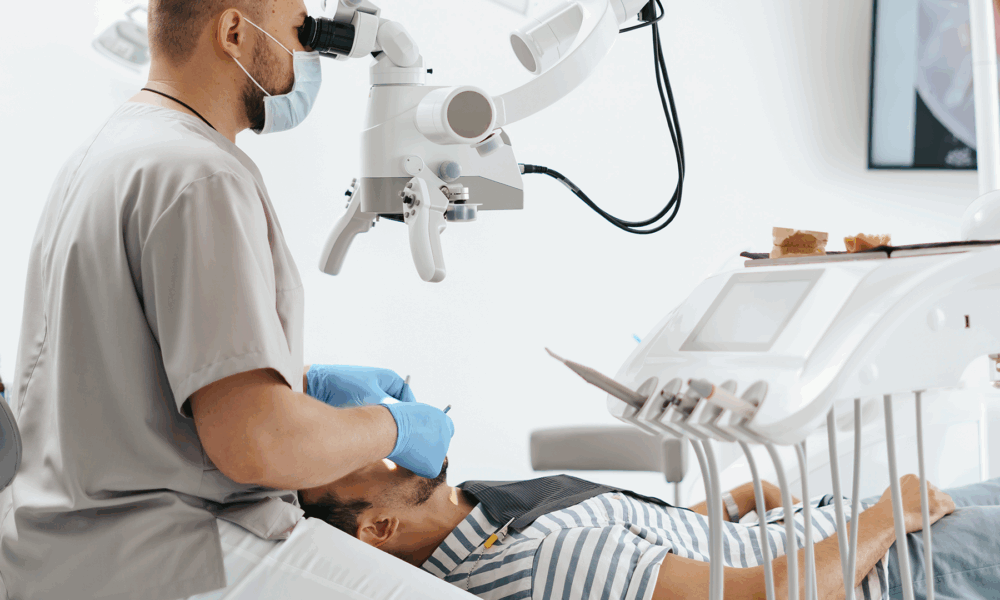
V Majdent Clinic we approach this procedure with the utmost precision and use microscope. This allows our experts to see in detail even the smallest details that would be imperceptible to the naked eye. Thanks to this device, we have the opportunity to clean the dental canals accurately and efficiently down to the depth, which significantly improves the quality and durability of the treatment.
- When is root canal cleaning necessary?
Cleaning the canals is necessary if there is an infection or inflammation in the dental pulp (pulp). The causes can be various, such as:
- If the decay reaches the pulp, where it causes infection.
- Damage to the tooth, such as an injury or a crack that causes inflammation.
- Because of repeated procedures on the same tooth site.
Without proper treatment, an infection in the tooth canals can cause Pain, creation of pus, swellings, and in the worst cases can lead to tooth loss.
2. How is root canal cleaning performed?
Diagnosis: it is essential to carry out the treatment before starting 3D X-raywhich will allow us to accurately determine the extent of the infection and the number of root canals that will need to be treated. This examination gives our dentists a detailed view of the extent of the infection, the depth of the root canals, the presence of cysts, cracks or other problems that may affect the success of the treatment.
Anaesthesia: the treatment is usually painless, as a local anaesthetic is initially applied to numb the affected area.
Access to dental canals: a small hole is drilled into the crown of the tooth to get to the inner part where the canals are located.
Elimination of infection: using special instruments to remove damaged or infected tissue (dental pulp) from the canals. The canals are carefully cleaned.
Disinfection: after cleaning the canals, antibacterial solutions are used to help remove the remaining bacteria and prevent further spread of infection.
Filling the channels: after cleaning and disinfection, the canals are filled with a special material to prevent bacteria from re-entering and to protect the tooth from further infection.
Final treatment: at the end, the tooth is fixed with a glass pin, which prevents it from breaking. Dead teeth are very fragile because they no longer receive nutrition and drainage from the pulp fabric. Once the tooth has been strengthened with a post, a definitive filling is applied. For long-term protection and to increase the strength of the tooth, it is recommended to cover it with a crown, which protects the tooth from further damage and ensures its full functionality.

3. Why is canal cleaning important?
Without cleaning the canals, the infection could spread further and cause tooth loss. This procedure allows you to keep your own tooth and avoid more costly and complicated procedures such as extraction.
Infection of the dental pulp can cause intense pain. After treatment of the canals, the pain should be significantly relieved or completely disappear.
Cleaning the ducts also prevents the infection from spreading to the surrounding tissues as well as to internal organs (such as the liver, heart or lungs).) and also helps prevent other problems such as inflammation of the jaw or damage to adjacent teeth. In this way, we protect not only your tooth, but also your overall health.
4. What are the benefits of cleaning the canals?
The main advantage is preservation of the original tooth. If the infection is removed in time, it is possible to save a tooth that would otherwise have to be removed. Another advantage is Time. Canal treatment can provide a permanent solution to the infection in the tooth roots, minimizing the need for further treatments. And the most significant advantage is pain relief. After treatment, most patients experience immediate relief.
5. What to expect after root canal treatment?
After cleaning the canals, the tooth may be gently sensitive for a few days, especially if the infection was extensive. This discomfort usually subsides. In some cases, it may be necessary to supplement the treatment with the fitting of a crown to provide stability and protect the tooth against breakage. Although this procedure may sound scary, modern techniques and anesthesia ensure that it is painless and effective.