 We accept Ukrainian-speaking patients

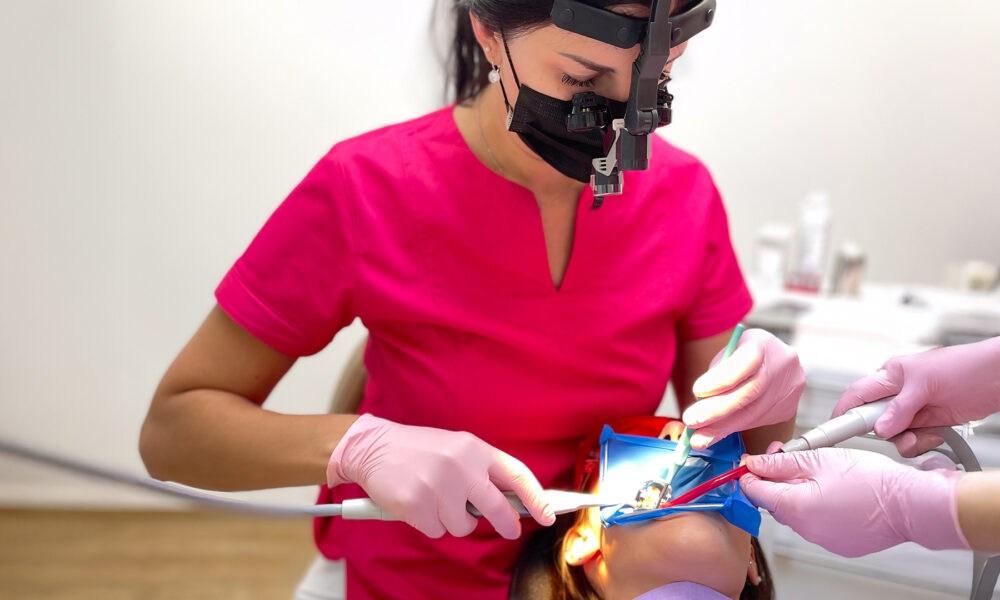
V Majdent Clinic we have recently come across a case which aptly demonstrates complexity of dental diagnoses and treatment procedures. The patient was diagnosed a year ago with a problem that was not visible at all at first glance. However, X-rays revealed a dark cavity under the root of the lower tooth, cyst. In this article, we will reveal how we solved this case and show the whole process of diagnosis and treatment.
A cyst in the bone is an insidious problem and often develops silently, without symptoms, and can grow until it threatens the health of the tooth, the bone and, in the worst cases, the patient's overall health.
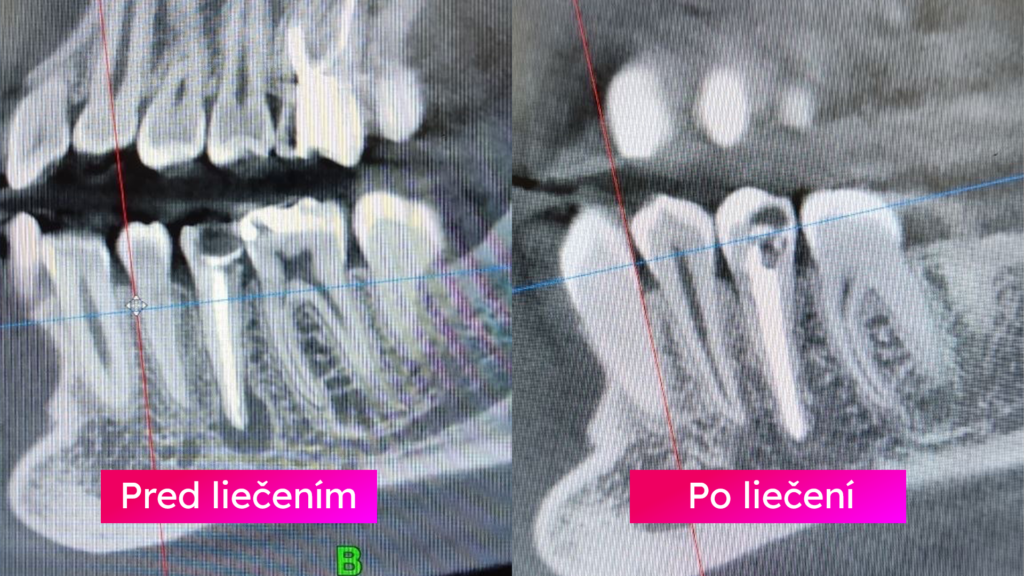
In the case of our patient, the cyst under the lower tooth was diagnosed by X-raywhere it appeared as a dark area under the root. A dark "shadow" on the image indicates a cavity (the darker the image, the lower the calcium content of the tissue). This condition can persist for months, even years, without the patient noticing any obvious symptoms.
What causes a cyst?
Several factors can influence the formation of a cyst:
- Untreated caries: cysts often form when tooth decay goes untreated for a long time. When bacteria from the corrosion deposit penetrate to the tooth root and then into the bone, they create inflammation that can develop into a cyst.
- Insufficient endodontic treatment: if a tooth has been treated but the root canal treatment has not been done well, a re-infection can occur. This is often due either to the complex anatomical arrangement of the roots, such as their curvature or forking, or to a failure of the treatment procedure itself. It is then necessary to open the tooth and the canals must be thoroughly cleaned, disinfected and filled gutaperchou - with a special resin-like material that seals the tooth hermetically.
- The overall inflammatory process in the body: in some cases, a cyst can form in a seemingly healthy tooth due to an inflammatory process elsewhere in the body. Infection can circulate in the blood and cause inflammation even in an apparently healthy area.
Long treatment process
Treatment of such cysts is neither simple nor quick. The tooth must be thoroughly disinfected several times and anti-inflammatory drugs administered directly into the root canals. The disinfection process is repeated periodically and often takes months before the infection is cleared and the canals can be filled definitively. After a successful treatment, however, the body needs time to recover. Healthy bone tissue must replace the space where the cyst used to be, and such a process can take up to a year.
Result
One year after the start of treatment, we invited the patient for a follow-up X-ray. The dark area was no longer visible on the image, which meant that the cyst had successfully filled in with new bone tissue and the tooth was healthy again. However, such a result is not always guaranteed and depends on the body's ability to regenerate. Especially patients with weakened immunity, such as diabetics, may have a problem with healing.
Prevention is key
This case highlights the importance of prevention and regular dental check-ups. The advice we often repeat to our patients is to have a follow-up 2D or 3D X-ray at least once every two to three yearsbecause this is the only way we can work together to catch potential hidden problems early. Cysts are unpredictable and often symptomatically imperceptible. Only consistent checks allow us to detect them early, to start treatment before they cause serious problems.
If you suspect any discomfort or just want to check the health of your teeth and bones, don't worry make an appointment for a check-up. At Majdent Clinic we are ready to help.