 We accept Ukrainian-speaking patients

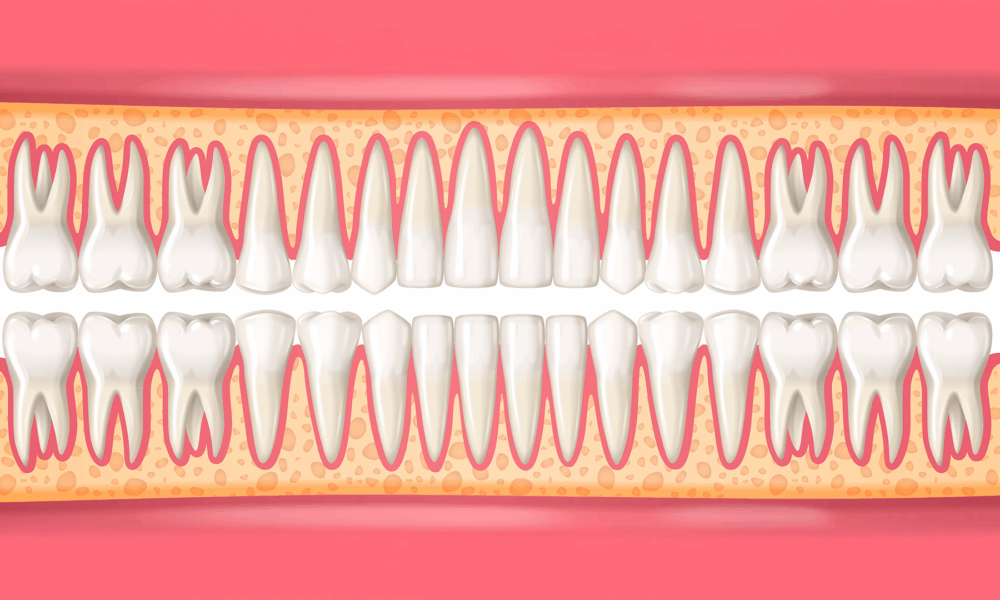
V Dentistry the goal of a filling is not only to simply repair a damaged tooth, but also to restore its original Anatomy. Teeth have a complex structure that is essential for effective chewing, proper articulation and overall oral function. Therefore, it is important that when modelling a filling, we take into account not only the filling itself, but also the exact replication of the original anatomical tooth structure.
The anatomy of a tooth has its own essence:
Each tooth is unique and its shape and position are adapted to specific functions, such as tearing or crushing food.
Every tooth has:
- tipused for tearing or shredding food,
- fissures (grooves)which guide the food during chewing,
- marginal rails and contact pointswhich ensure stability and correct placement in the dental arch.
When the tooth is damaged by decay, it loses not only part of its mass, but also its specific form and this is what needs to be restored as precisely as possible during treatment. It is essential that the dentist not only fills the cavity but also restores the original shape of the tooth after the decay has been removed. Without accurate sculpting, problems with tooth balance can occur, which can affect the patient's comfort. Also, incorrect alignment of the filling can cause an improper bite, which can lead to jaw joint pain and excessive tooth wear.When sculpting a filling, very careful consideration must be given to anatomical details of the tooth. It's not just about aesthetic appearance, it's all about restoring function.
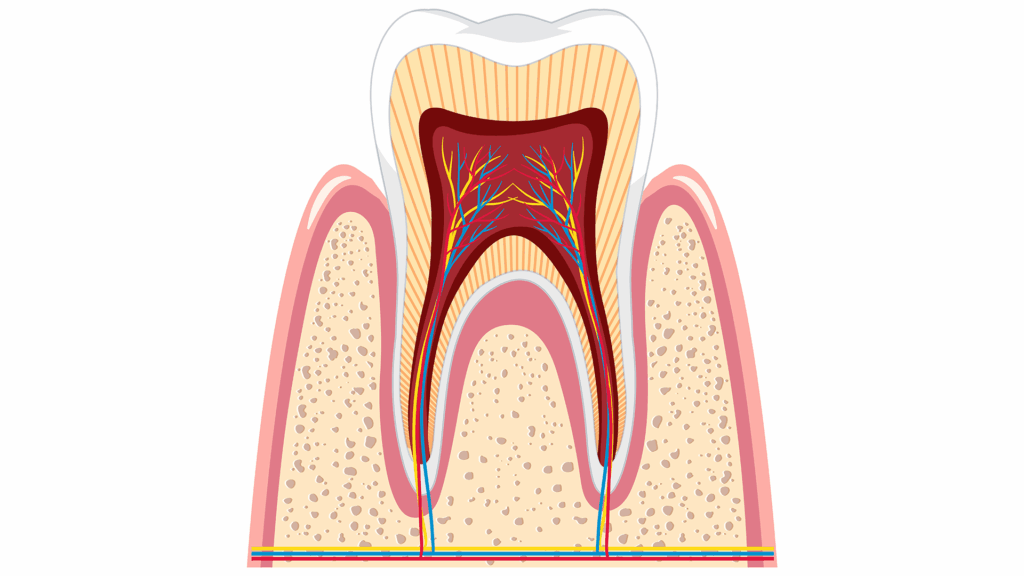
Encyclopedia (enamelum): the white outer layer of the crown, the hardest substance in the human body.
Denture (dentinum): the yellowish layer beneath the enamel, making up most of the tooth substance. It has a finely striated texture that is visible towards the centre of the tooth.
Dental pulp (pulpa dentis): the red central part with visible blood vessels and nerves. Responsible for the nutrition of the tooth and the perception of pain.
Crushing of a tooth (cervix dentis): the narrow area between the crown and the root, at the level of the gum.
Tooth root (radix dentis): under the gum, embedded in the bone. It connects to the jaw by a ligament.
Dental cement (cementum): a light grey thin layer covering the root of the tooth.
Periodontal ligament (ligamentum periodontale): the thin layer between the root and the bone. It ensures the elastic attachment of the tooth.
Alveolar bone (os alveolare): the beige structure around the roots, forming the part of the jaw in which the tooth is placed.
Gums (gingiva): the pink soft tissue surrounding the crown and neck of the tooth.
Blood vessels and nerves: blue and yellow branching in the pulp, which supply the pulp through the root canal.
Benefits of a properly sculpted filling:
- Proper function in chewing, articulation and contact with adjacent teeth.
- It helps prevent the formation of micro-cracks where bacteria could accumulate.
- Aesthetic function.
The filling, which respects the natural anatomy of the tooth, evenly distributes chewing pressure, reducing the risk of overloading the teeth or jaw joints. Properly sculpted occlusion (chewing surface) of the filling ensures harmonious cooperation of the upper and lower dentition, thus contributing to the long-term stability of the dentition and the patient's comfort during daily use.
V Majdent Clinic we place great emphasis on accuracy. Our work doesn't just stop at the placement of the filling, but also includes careful shaping and fitting to the anatomical form. Using modern materials such as Composite resins, porcelain or glass ceramic fillers, and the latest techniques we can achieve not only aesthetically beautiful, but also functionally perfect seals. These materials allow us to create fillings that not only look natural, but also provide optimal function and comfort for patients over the long term.
Procedure: how does the modelling work?
After removal of the caries and preparation cavities shall be used composite materialwhich is layered and shaped according to the anatomical lines of the tooth. This uses:
- silicone indices or matrix systemswhich help to shape surfaces,
- anatomical instruments such as modelling spatulas or brushes for creating grooves and bumps,
- knowledge of the topography of the toothwhich is essential for proper reconstruction.
The anatomy of the tooth is the cornerstone of any successful dental treatment. Without a thorough understanding of its structure, repairs would lose quality. Teeth that are properly restored can last for years. Our goal is to ensure that every filling we create is a perfect reproduction of the original tooth shape, restoring its functionality and appearance.
V Majdent Clinic We pride ourselves on being able to provide patients with not only quality, but also functional and aesthetic solutions to help them maintain a healthy and beautiful smile. Feel free to contact us or simply book a date. We will be happy to help you find the right solution for your smile.