 We accept Ukrainian-speaking patients
Subgingival tartar is one of the main causes of gum disease and periodontal problems. Unlike supragingival tartarwhich is located above the gum line and is visible to the naked eye, subgingival calculus forms below the gum line and can cause long-term damage to periodontal tissues.
"In the early stages, the symptoms are only visible to a specialist."
How does subgingival tartar form?
Subgingival stone is emerging mineralisation of dental plaquewhich contains bacteria, minerals from saliva and other organic components. If plaque is not removed by regular oral hygiene or professional cleaning, it will gradually start harden and move below the gum linewhere it creates an ideal environment for the growth of harmful bacteria. These cause gingivitis (gingivitis), which can develop into periodontitis or periodontal diseasechronic inflammation leading to bone loss and loosening of teeth.
If the patient does not remove the plaque properly, they may push it under their gum when brushing, where it can more easily attach. It doesn't settle as quickly on smooth enamel, but under the gum, where the tooth surface is rougher and cleaning more difficult, it mineralises much more easily.
Why is a subgingival stone dangerous?
- It is hard to find and completely invisible.
Subgingival calculus is not freely visible and cannot be removed by normal household hygiene.
- Promotes inflammation.
Irritates the gums and causes them Redness, swelling and Bleeding.
- It leads to bone tissue loss.
If left untreated, it can cause bone loss and weakening of the teeth.
- It can affect overall health.
Chronic inflammation caused by bacteria in the subgingival stone may be related to heart diseases, diabetes and other systemic diseases.

How is it diagnosed and removed?
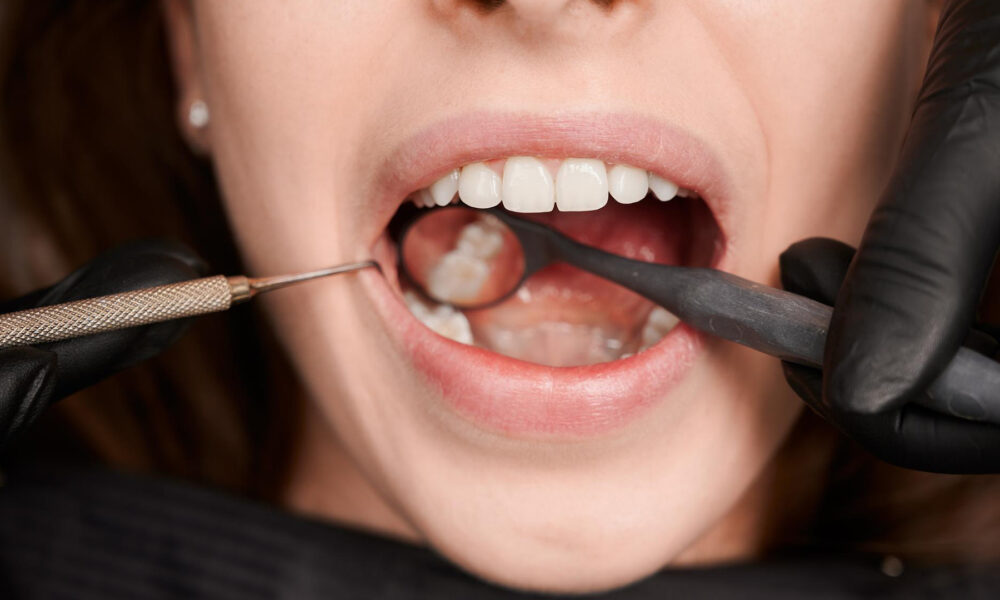
Majdent clinic experts diagnose the presence of subgingival calculus early by probing periodontal pouches and X-ray examination.
However, removal is possible only by professional methodssuch as:
- Kyretage: it is a manual cleaning with a special tool (cyrette), often performed under local anaesthesia for a painless procedure. Mechanical removal of the stone is followed by disinfection of the affected sites and tissues using solutions such as peroxide.
- Ultrasonic cleaning (scaling): it is the use of ultrasonic tools to break up and remove the stone. It also involves deep cleaning of the tooth roots to remove plaque and smooth the surface, reducing the risk of plaque re-deposition.
Prevention of subgingival tartar
The best defence is prevention. Important steps include:
- Regular and thorough brushing at least 2 times a day.
- Using dental floss and interdental brushes to remove plaque between teeth.
- Visits to the dentist and passing dental hygiene at least 2 times a year.
- Proper technique for brushing your teeth at home.
- A balanced diet that supports oral health.
Subgingival tartar is a serious problem that requires professional care. If you notice any signs of gingivitis, don't hesitate to visit Majdent dental clinic to prevent more serious complications.
To learn more about subgingival tartar, watch our video on TikToku. On our profile you will also find a lot of other useful information, tips for proper dental care. Don't forget to follow us tooso you don't miss out on any benefits you can get with us.